Your real job as a CEO: what a breakup taught me about company culture
People love startup stories about day zero.
Who signed what, who brought what, who owns what.
Almost nobody talks about the day it breaks.
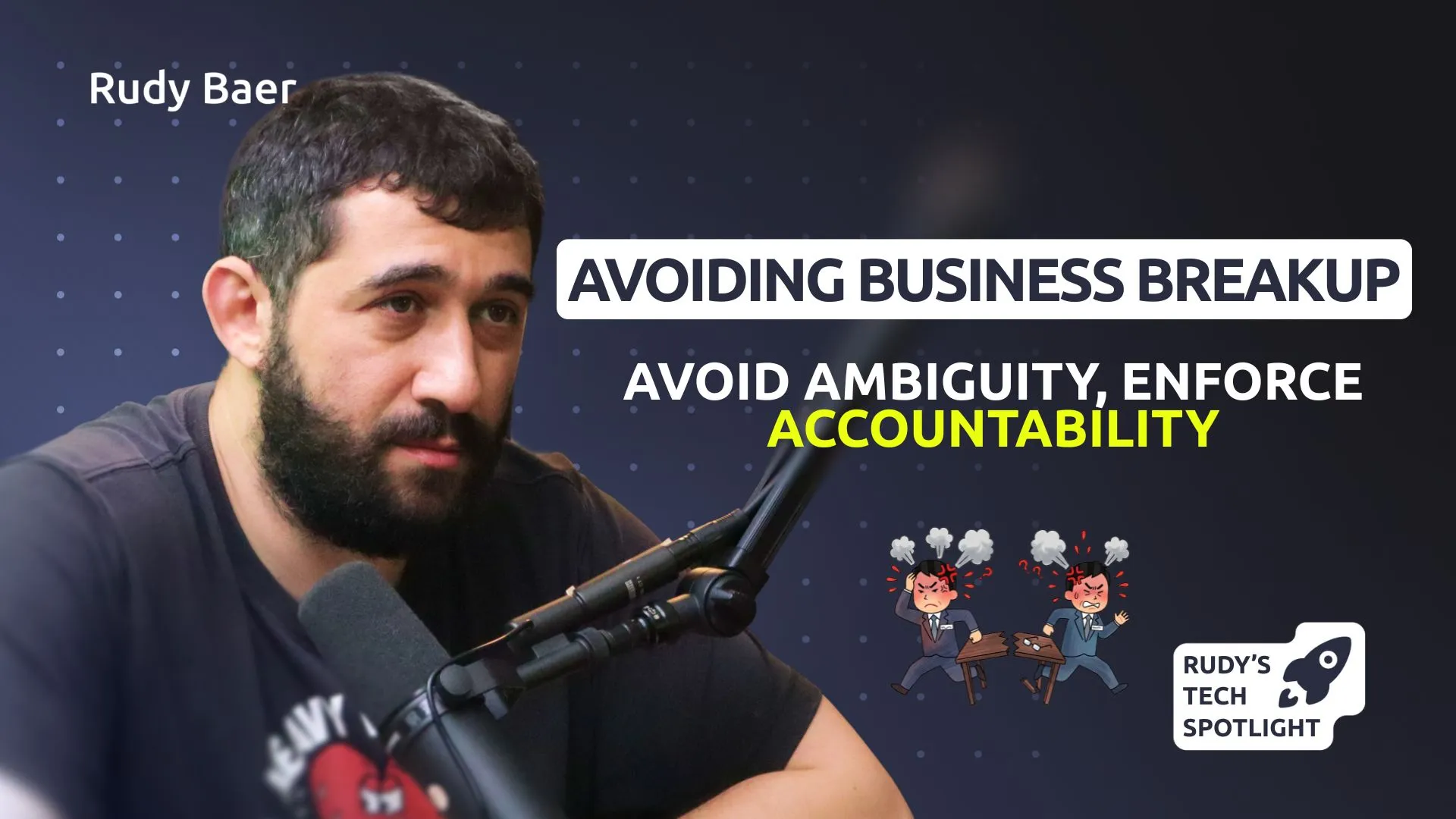
Separating from a business partner is one of the least glamorous moments in leadership, but it is one of the most useful. A business partner breakup reveals your real standards faster than any strategy deck ever will, because it forces every vague word in company culture to become an operating decision.
This is not a revenge story.
It is a leadership accountability story.
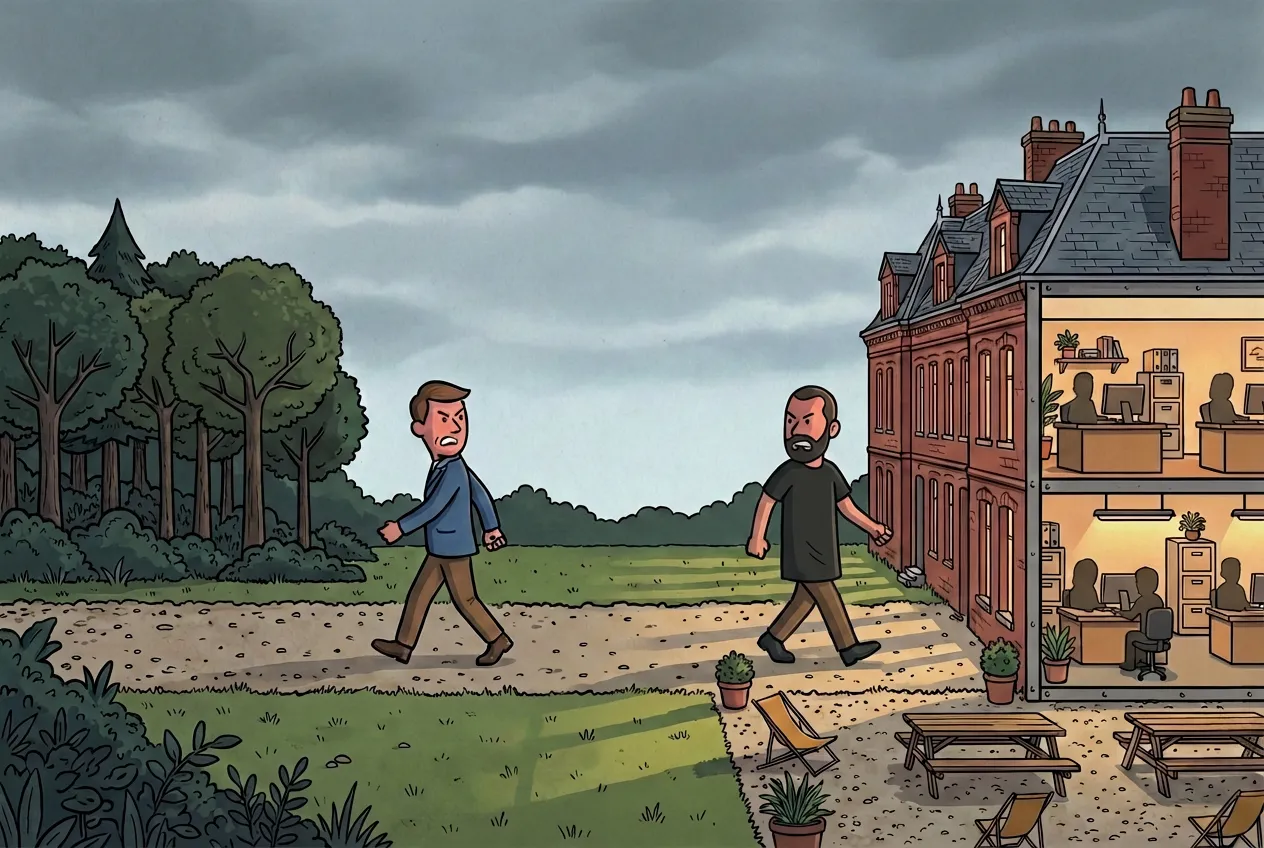
From nice to fair: leadership accountability under pressure
For years, I tolerated too much. I gave the benefit of the doubt, tried to keep everyone aligned, and tried to stay “the reasonable one”. I told myself that patience was always the right leadership move.
That helped in the early years. At that stage, you need flexibility, because everything is fragile. People are learning, roles are not fully clear, and everyone is doing three jobs at once. If you react too hard too early, you kill momentum.
But there is a hidden cost.
When accountability gets postponed, “being nice” starts creating debt. You pay that debt in slower decisions, low-grade frustration, and team confusion. The team starts asking a simple question in their head: “Are the standards real, or optional?”
Once that question appears, culture starts drifting.
At that point, being nice is no longer leadership.
It is avoidance.
My part in the business partner breakup
This was not only “something the other side did”.
I also enabled part of the drift.
I tolerated ambiguity for too long.
I did not codify decision rights early enough.
I allowed recurring loops to continue instead of forcing closure.
And in tense moments, I did not separate tone feedback from decision closure clearly enough.
That’s on me.
And it is exactly why I changed the system, not just the people.
Where culture fit became a company risk
I recently separated from a long-term business partner.
The issue was not technical ability.
The issue was culture fit under pressure.
On paper, we could still look aligned. In practice, every serious operational discussion followed the same pattern. I raised a concrete business point: delivery risk, ownership gap, execution priority, or commitment not honored. Instead of staying on substance, the conversation moved to my tone.
So instead of solving company issues, we were debating whether I was a good person in the way I spoke.
That is the trap.
When culture is vague, hard decisions become personality trials. The facts become secondary, and the loudest emotional framing wins the room. When culture is explicit, we can disagree strongly and still stay on the same ground: facts, accountability, and outcomes.
 I am direct. That’s not a secret. Some people appreciate it. Some people do not. I can always improve form, and I do. But I refuse a system where form is used as a permanent excuse to avoid content.
If the content is correct and necessary, leadership still has to act.
Even when the discussion is uncomfortable.
A practical conflict management loop
To make this practical, here is one loop that is repeated.
Context:
We had a delivery milestone tied to a client commitment.
Commitment:
One owner, one date, one expected output documented in writing.
Breach:
Deadline slipped without prior renegotiation.
Conversation pattern:
Instead of reviewing ownership, risk, and recovery plan, the exchange drifted to “your tone is the real issue”.
Immediate cost:
Decision delay, team confusion on priority, and extra pressure on people who were already delivering.
Intervention I used:
Written follow-up after the meeting, explicit owner/date reset, and a clear rule that tone feedback is valid but cannot replace decision closure.
What would have prevented it earlier:
Explicit non-negotiables, predictable consequences for repeated avoidance, and decision-right clarity before conflict.
The accountability pattern behind founder conflict
This was not one bad conversation.
It was a repeated pattern:
- loyalty when things are easy, distance when things are hard,
- strategic disagreement without ownership,
- and “I don’t like your tone” used to dodge substance.
Sometimes tone feedback is fair.
Sometimes it is a shield.
Leadership has to know the difference.
A simple test helps.
If someone challenges your tone but still engages the facts, that can be healthy feedback. If someone only attacks your tone and consistently avoids decisions, commitments, and outcomes, that is not communication coaching. That is accountability avoidance.
This distinction matters because companies do not fail from one dramatic argument. They fail from repeated unresolved loops. Same issue, same debate, same emotional diversion, same delay, again and again.
That is how trust dies.
Not with a bang.
With repeated small cracks.
Why business separation became the clean decision
I want clean business relationships.
Not blind agreement.
Not status-driven dynamics.
Clear alignment on values, commitments, and accountability.
Once that disappears, partnership becomes performative alignment, and performative alignment destroys companies slowly.
At some point, the responsible decision is to stop pretending that more meetings will fix a structural mismatch. More calls do not fix misaligned principles. Better slides do not fix low ownership. Better wording does not fix repeated deflection.
So I chose separation.
Not because it was easy.
Because the alternative was worse.
And yes, separation has a cost. Legal work, operational transition, emotional fatigue, narrative noise. But keeping a structurally broken partnership has a bigger cost, because it infects every future decision.
A company cannot scale on unresolved cultural contradictions.
A second partnership proved the pattern
The breakup is the clearest example, but it should not stand alone. This pattern is not unique, I’ve seen it play out in different contexts. For example, in another international partnership, with different people and a different outcome, it stops being just an anecdote. It becomes an operating signal.
The facts were different, but the root cause was the same: loyalty and standards under pressure.
I escalated hard and set a clear boundary: either we realign on commitments, or we stop.
Same root cause.
Different outcome.
This is important, because some people hear “culture enforcement” and translate it to “cut everyone off”. That is not the point.
The point is this:
- standards must be explicit,
- boundaries must be visible,
- and consequences must be credible.
In that partnership, pressure and clarity restored alignment.
In the breakup case, they were not.
Leadership is not about using the same tool every time.
Leadership is about reading the pattern correctly and choosing the tool that matches reality.
Sometimes that tool is escalation.
Sometimes it is separation.
What changed in our decision rights
After this, I changed operating mechanics, not just posture.
Before:
Conflicts could stay open across multiple meetings, and ownership could blur during tension.
After:
Each critical topic has one owner, one decision right, one deadline, and a written follow-up. If commitments are repeatedly missed without proactive renegotiation, responsibilities change.
This is what “fair” means in operations:
Expectations written, feedback timely, commitments tracked, consequences predictable, and dignity preserved.
What teams see during founder conflict
Founders often think these conflicts are private. They are not.
Your team sees everything that matters:
- who is held accountable and who is protected,
- whether commitments are real,
- whether performance standards are consistent,
- whether hard conversations produce decisions or noise.
Even if no one says it out loud, people update their trust model in real time.
If they see that standards disappear when tension rises, they adapt in predictable ways. Strong people disengage or leave. Political behavior increases. Decision quality drops. Everyone becomes careful with the truth.
If they see that standards are enforced fairly, something else happens. People feel safer to commit. Feedback becomes clearer. Energy goes to execution instead of speculation.
This is why culture is not a slogan.
It is a daily operating system.

The leadership accountability transition
There is a phase when you are the challenger.
You explain everything.
You absorb everything.
You prove yourself constantly.
Then there is another phase.
Track record exists.
Results exist.
Your job changes.
You are no longer optimizing for universal approval.
You are optimizing for long-term company health.
That means:
- less tolerance for recurring misalignment,
- faster action when values diverge,
- clearer boundaries on behavior,
- and less confusion between kindness and permissiveness.
Many leaders struggle at this transition point. They keep applying early-stage social rules in late-stage governance decisions. It feels human, but it creates drift.
Maturity in leadership is not becoming colder.
It is becoming clearer.
The risk in enforcing company culture
If you apply this lens badly, you can confuse disagreement with disloyalty and react too fast. That is a real risk.
So the guardrail is simple: decide on evidence and repeated behavior, not emotion from one meeting. Fair leadership is not soft, but it is also not impulsive.
Another guardrail: separate style friction from value friction.
Style friction can be coached.
Value friction has to be resolved.
If you mix the two, you either overreact to personality differences or underreact to structural risk. Both are expensive.
Also, keep a factual log when things get tense. Not to build a case against people, but to protect decision quality from memory bias and competing narratives under stress.
Facts are stabilizers.
Especially when emotions rise.
Actionable company culture toolkit
The practical work starts before the crisis. Once everyone is tense, the company needs a baseline already written down, because that is what keeps company culture operational instead of opinion.
To make this actionable without waiting for a crisis, here’s my baseline:
- commitments are written with a clear owner and date (disagreements happen in the room, not in side channels),
- deadlines are renegotiated before they break,
- we debate hard, then commit to the decision,
- feedback includes a concrete next step,
- recurring avoidance triggers role or decision-right adjustment.
And one meeting rule:
We can log tone feedback, but we still close the decision. Tone is addressed after decision closure, not as a substitute for it.
Rule of thumb for fair leadership
The lesson did not appear on the day of the breakup. It comes from years of building BearStudio, from the early choices behind starting BearStudio to the harder operating reality of growing from 1 to 20 people. I grew BearStudio through that pressure, and I consolidated these learnings step by step: company culture only becomes real when vague values turn into decisions, consequences, and standards people can trust.
I am not moving from kind to cruel.
I am moving from nice to fair.
Fair means clear standards.
Fair means consistent consequences.
Fair means no special exceptions for recurring avoidance.
Fair means culture is not negotiable.
And fair also means this: we keep people accountable for what they do, not for the story they try to build around what happened.
If that makes me less comfortable to work with for some people, fine. I am optimizing for a company that can last, not for temporary approval.
If you lead a company, take this early:
Write your non-negotiables.
Say them clearly.
Apply them consistently.
Do it before pressure.
Because once pressure arrives, culture does not appear.
It gets revealed.

Rudy Baer
Founder and CTO of
BearStudio,
Co-founder of
Fork it! Community! &
Peinture