My love letter to ChatGPT (or how I stopped worrying and learned to embrace our AI overlord)

ChatGPT gave me 2 hours back every day.
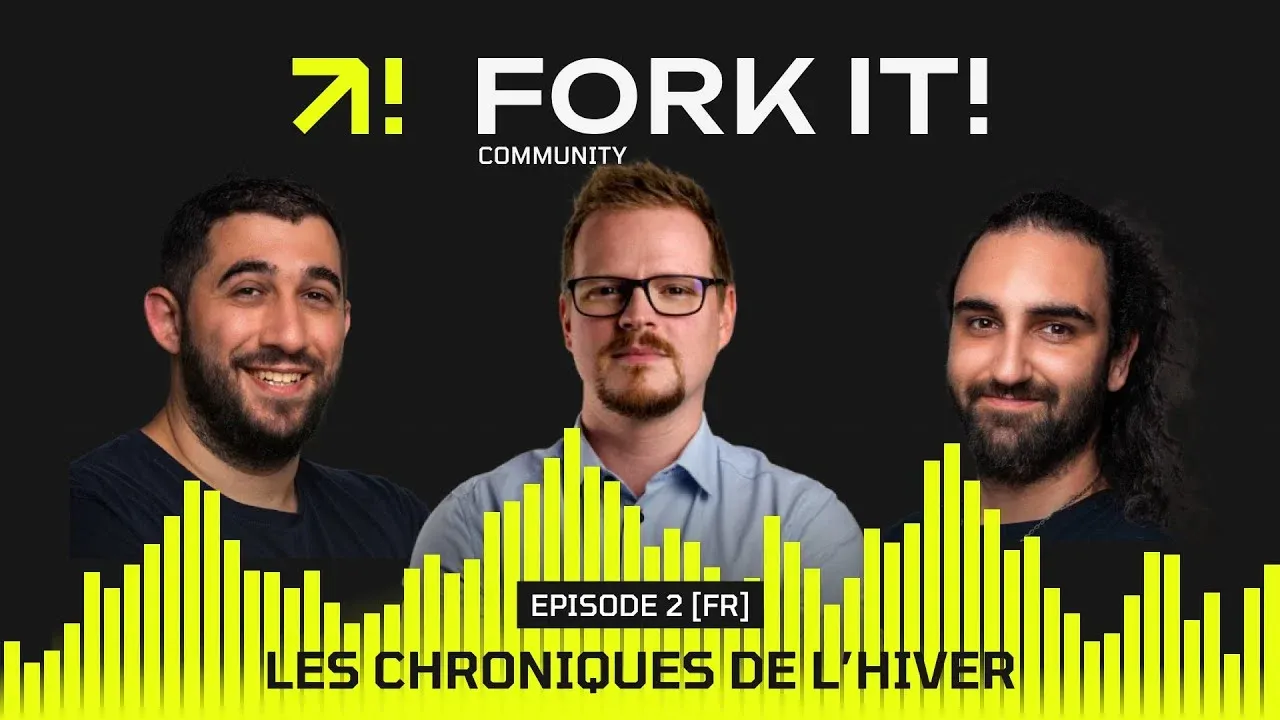
My previous article was based on the first Fork it! chronicles. This one builds on my second Fork it! podcast in French, titled “Winter Chronicles”, available here.
In the same tone, the humor stays strong, but the degree of truth is higher: I will expose how the use of AI helped me free some time to manage my business; and actually watch my son grow up.
ChatGPT changed my life. Not in a “tech messiah” way, but in a very practical one.
People keep debating whether AI is going to steal everyone’s job or become conscious and enslave humanity. Meanwhile I’m over here using it to fix my emails and figure out if expired detergent is going to melt my clothes. As I wrote in the last article of my “AI in the real world” series: the same panic happened with smartphones, with the internet, with calculators… for God’s sake.
ChatGPT is a revolution. Period.

It is fundamentally changing how we interact with information and how we work. As a father running a business, managing teams, and trying to keep my head above water in the daily chaos of entrepreneurship, I’m going to tell you exactly why this tool has become core part of how I work. And to be clear: I’m not talking about AI replacing developers or making humans obsolete. This is personal. This is about ChatGPT as the productivity multiplier that compresses my day so I can focus on the things that actually require a brain.
And this is the core idea of that chronicle: ChatGPT is a sparring partner which forces you to ask better questions. If you want better decisions, better management, better outputs, you need better questions first.
The time-saving machine
As a business owner, time is the only resource I can’t manufacture more of. If ChatGPT saves me 30 minutes a day, that’s 30 minutes I can spend on strategic decisions instead of formatting emails or googling basic information for the tenth time.
I won’t share my ChatGPT history with you (way too much filtering required), but I can tell you the main categories where this thing has become my patient professor, my grammar assistant, or my diplomatic translator when dealing with people who need things spelled out.
Making me sound like a functional adult
As a CTO and technical profile, people usually tolerated my rough writing because the ideas were solid. But in some business contexts, that was still a handicap, and I had to spend time polishing wording.
Now? I draft the email how I want to say it, paste it in ChatGPT, ask it to fix the grammar and make it sound professional (but not too professional, I’m not a corporate robot), and boom. Done in 30 seconds instead of 10 minutes, at best.
Some people might call this cheating. I call it accessibility. Not everyone has perfect command of written language. There’s no medal for spending extra time on spelling when you could be solving actual problems.
The real value: better questions
For me, this is the key point. ChatGPT is not just a writing assistant. It’s a question machine, a sparring partner.
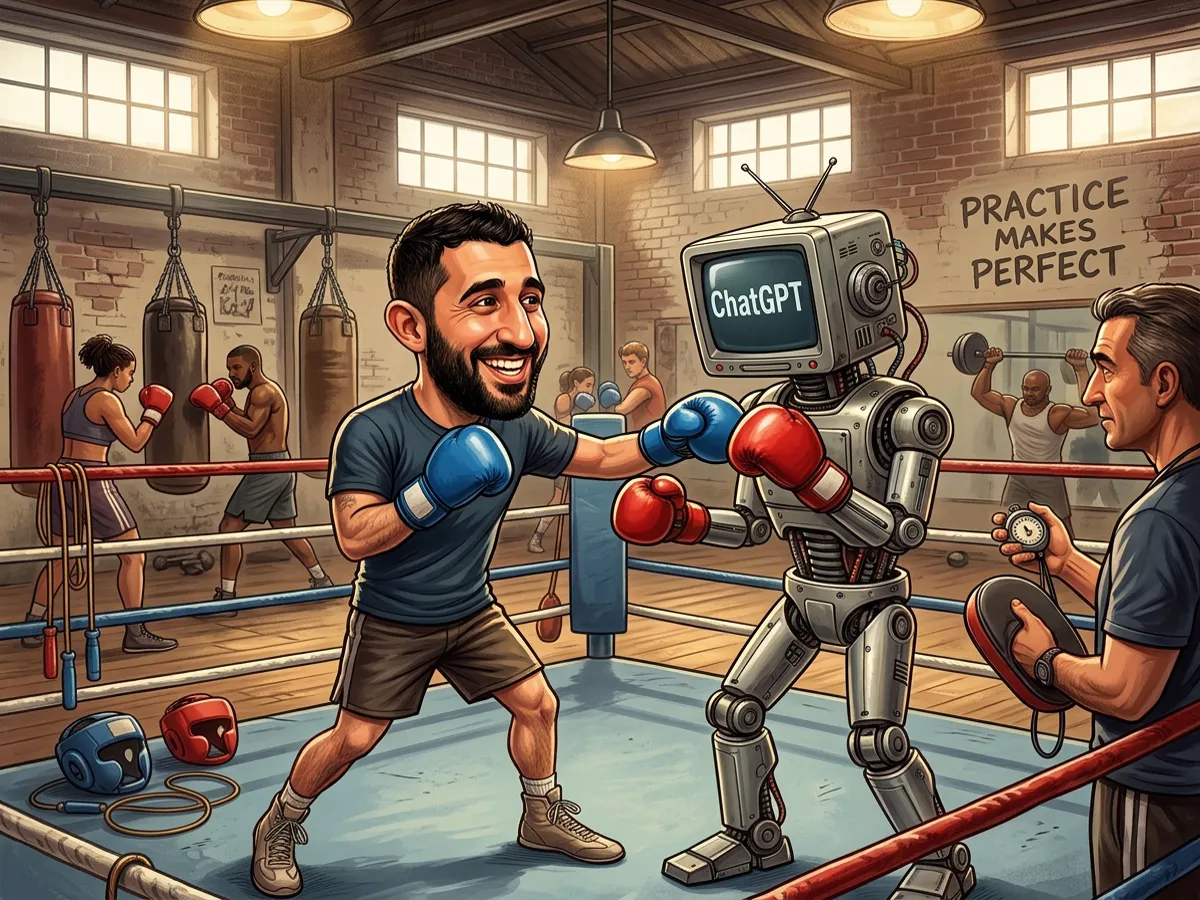
You ask one question, then a better one. Then an even better one. You challenge assumptions. You ask for alternatives. You ask what you’re missing. You ask what would make your own reasoning wrong. Then you ask the hardest one: what makes a question actually good in this context?
That loop is the value.
To become good at anything, you need to ask good questions. To ask good questions, you need to practice asking lots of questions, then learn to sort them, sharpen them, and discard weak ones. ChatGPT gives you an always-available sparring partner for that practice. And practice makes perfect.
It helps in management, strategy, communication, and technical work. Not because it magically replaces thinking, but because it pushes you to structure your thinking.
Biases, hallucinations, and reality checks
Yes, ChatGPT makes mistakes. Yes, it can confidently state completely wrong information. Yes, you need to verify anything important.

I learned this the hard way. Last year I was preparing a client proposal and asked ChatGPT for some benchmarking data on React Native performance compared to native apps. It gave me specific numbers, percentages and all, with this confident academic tone like it was citing a peer-reviewed study. I almost copy-pasted it straight into the proposal. Something felt off, so I double-checked. Half the “statistics” were fabricated. The sources it referenced did not exist. If I had sent that to the client, I would have looked like an idiot, or worse, dishonest.
That was a good lesson. ChatGPT is not a source. It’s a starting point. Treat it like a smart intern who sometimes makes things up with total conviction.
But your colleagues also make mistakes. Wikipedia was supposed to be the death of accurate information (it wasn’t). The internet has always been full of dubious sources. AI doesn’t change the fundamental rule: verify important things, use critical thinking, and don’t believe everything you read.
The difference is that ChatGPT pushes better questions. When you can’t just accept the first answer, when you need to refine your prompts and cross-reference information, you actually develop research habits.
Most people believe whatever they’re told anyway. Truth is an ideal, and like all ideals, it’s unattainable. The tool isn’t the problem. The lack of critical thinking is.
And honestly, the hallucination thing is kind of funny once you accept it. I asked ChatGPT about a very specific npm package once and it invented an API that doesn’t exist, complete with method names and parameter descriptions. Beautiful documentation for a fantasy library. I almost admired the creativity.
The Internet without the bullshit
There was a time when Google was actually useful? Now it’s just a minefield of sponsored content, SEO-optimized garbage, and websites begging you to accept cookies while simultaneously blocking half the content behind paywalls. And most of it is now written by ChatGPT anyway…
I needed to know what a specific symbol on my HyperX microphone meant. Googling it gave me three pages of affiliate marketing articles about “Top 10 Gaming Microphones in 2026!” before I could find actual information.
ChatGPT? Straight answer in five seconds.
Another anecdote. I had a bottle of laundry detergent that I’d moved between apartments for five years. Does it expire? Is it still safe to use? Should I throw it away?
This is exactly the type of stupid question that feels too trivial to ask a real person (not to mention the challenge of finding someone who happens to be an expert on expired laundry products) but important enough that you want an answer. ChatGPT gave me practical tests to check if it was still good (smell, consistency, etc.) without judgment or a 20-minute conversation about my life choices.
These little moments add up. Being able to ask anything, no matter how dumb, without social consequences or small talk, is genuinely liberating.
 A picture of me taking five seconds to get a quick answer from ChatGPT.
So what?
I’m not saying ChatGPT is perfect. It hallucinates, it gets confidently wrong, and sometimes it writes like a corporate brochure from 2019. But as a practical tool for everyday work, it’s genuinely revolutionary in the same way smartphones were.
It saves time. It enables better communication. It provides patient teaching when humans can’t. It offers analytical distance when emotions run high. And it costs basically nothing compared to the value it provides.
The real value is not just speed. ChatGPT acts as a sparring partner: you ask one question, then a better one, then ten more, and through repetition you start seeing which questions actually unlock useful thinking. That discipline, learning to generate, test, and select the right questions, is what improves decisions in management, strategy, and execution. Time saved is great, but this is the deeper gain.
Me, I’ll take the two hours back. I’ve got a company to run and a kid who won’t wait until I’m done formatting emails to grow up.

Rudy Baer
Founder and CTO of
BearStudio,
Co-founder of
Fork it! Community! &
Peinture