I don't want to be a one-man army. I want a team that doesn't need me anymore.
With AI, I can do the work of ten people. That’s exactly what worries me.
More and more CEOs, CTOs and founders are sharing what their new daily life looks like. They build their own tools, automate their processes and orchestrate armies of agents. The famous “one-man army”.
I find it fascinating. I run exactly this kind of experiment myself.
But when you lead a company of several dozen people, this approach hides two traps. And yet I still think it’s where you have to start.

Trap #1: the leader who does it all
With a minimum of technical background, I can now do almost everything on my own.
An internal tool? I prototype it. Data to analyze? I plug an agent into it. A process that’s stuck? I try out a different organization.
What used to take several people, several meetings and several weeks can now be explored in a few hours.
The temptation is strong. When someone on my team is stuck, I can have an agent analyze their problem and send them back the solution.
Except my job as CEO is to build an organization that runs without me stepping in everywhere. If I produce more but every decision still goes through me, I haven’t improved anything.
I’ve just become a much more efficient bottleneck.
And a more dangerous one. I can solve problems I should have delegated. AI makes micromanagement way easier.
Why I test things myself first
Buying ChatGPT or Claude licenses and telling your teams to figure it out changes nothing.
To move an organization forward, I first need to understand where the real gains are, where the limits are and how to organize information so that everything holds together.
You don’t learn that from slides. You learn it by doing.
That’s what I’m doing at BearStudio. I’m rethinking what we do with meeting notes, how we track actions and how decisions flow. With AI, I try an idea, see what breaks and fix it in a few days instead of a few months.
I’m not building these tools to run everything myself. I’m building them to understand how everyone can better run their own scope.
Teach people to fish instead of fishing for them
The saying is a bit of a cliché, but it sums up the point well.
Sending the solution back to someone who’s stuck is fast. But I can’t do it for everyone, and nobody learns anything.
So I’m trying to break that reflex. I share the method rather than the solution. Instead of developing a tool for someone, I help them adapt their own. And I give them access to the context and data they need to do the analysis themselves.
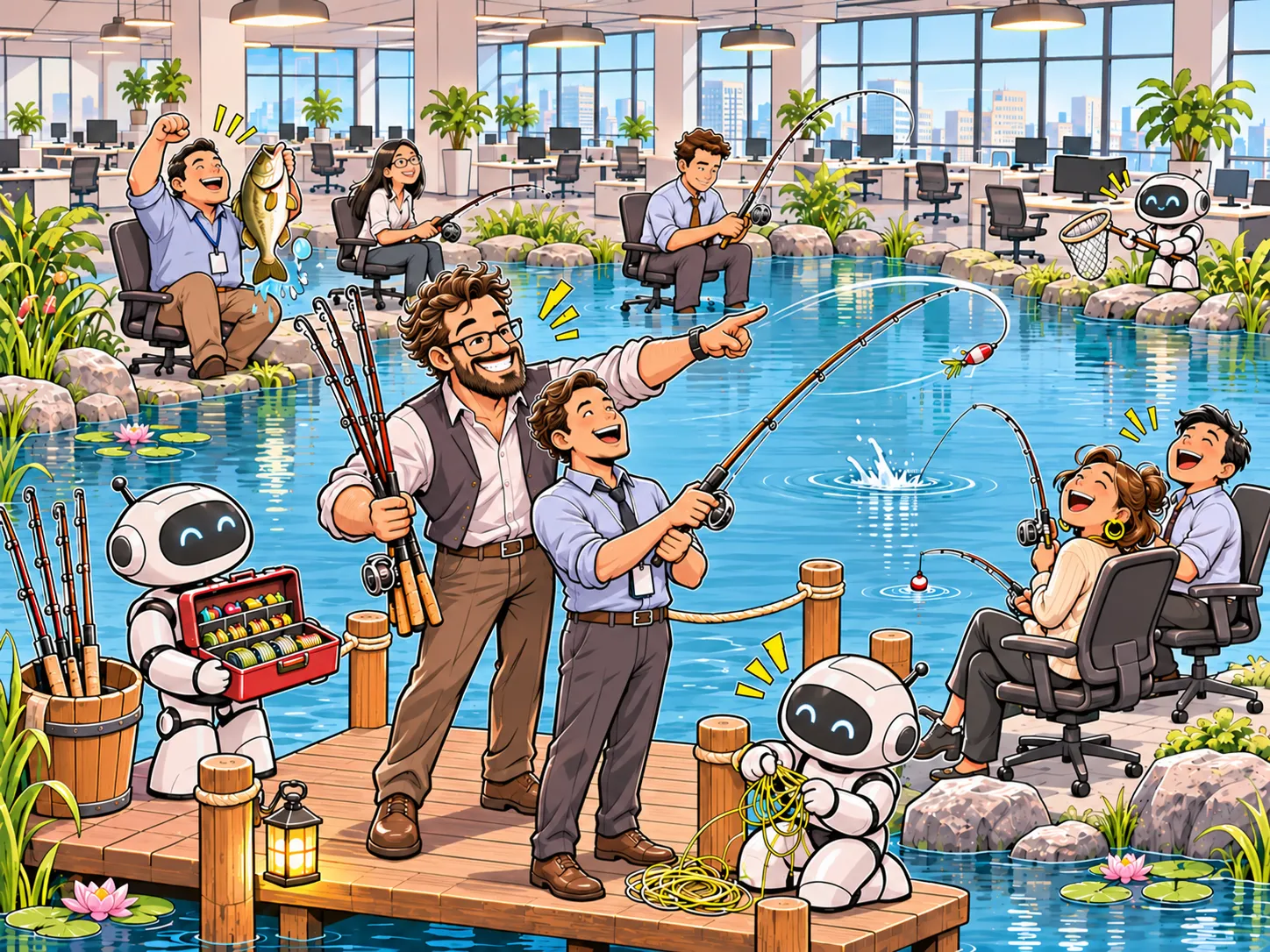
My role is changing. I’m no longer just organizing other people’s work, I’m putting in place the environment that lets them move forward without me.
Trap #2: the siloed team
There’s a second trap.
Imagine that tomorrow, everyone has their own agents and becomes highly effective. The sales rep prospects and prepares proposals. The PM analyzes needs and prototypes solutions. The dev codes faster. The operations manager automates their tracking.
On paper, it’s great. In practice, if everyone works in their own corner, with their own context and their own information, you multiply silos.
AI massively speeds up everyone’s work. It doesn’t improve collaboration on its own.
You can produce ten times more documents, prototypes or code without being any more aligned. And create just as many more things to explain, check or redo.
It’s one of the thoughts that led us to work on Peinture. How do you turn individual gains into collective efficiency?
That takes balance.
On one side, everyone keeps their safe zone, with the freedom to experiment, their tools and their agents.
On the other, the company keeps a common foundation with the decisions, business rules, goals and history of what’s been done.

Everyone needs to be able to start from the same understanding, and enrich it. Agents can stay individual, as long as teams keep working together.
The real indicator
We’re going to see a lot of leaders able to run an entire company with a handful of agents. For a startup built from scratch, with a very small team, it’s probably a great approach.
For an organization that already exists, with its people, its teams and its history, the question is elsewhere. How much can my team do without me?
- Can my PM explore an idea without waiting for a developer to have time?
- Can my sales rep do a first analysis without pulling in three people?
- Can someone spot a problem, prototype a solution and get it approved without me coordinating everything?
- And can all these people work together, share what they find and make consistent decisions?
Expertise doesn’t become useless. We’ll always need designers, developers, sales people and domain experts. Everyone will simply be able to go further, without depending on others at every step.
So, a year from now?
Experimenting on your own is still a great way to learn. But you need to know what you’re building behind it.
If a year from now I’m doing the work of ten people and my team still works the same way, I’ll have missed something. If everyone has become more autonomous and those gains add up, then we’ll have truly transformed the company.
Become a one-man army, yes. To teach others to fish, not to fish for them.
Are you already the one-man-army guy? Let me know 🙂 I’m curious

Rudy Baer
Founder and CTO of
BearStudio,
Co-founder of
Fork it! Community! &
Peinture